


How to Start a Homestead on a Budget(Without Accidentally Buying 15 Goats)
- whiteriverfarmsgoa
- Feb 3
- 5 min read
Updated: Feb 16

At White River Farms, our homesteading journey didn’t begin with a perfectly planned farm, a neat little garden, or a well-thought-out animal list. It began the way many dreams do—overcrowded, overly ambitious, and fueled by one too many “we can totally handle this” conversations.
We moved from the big city to rural East Texas chasing a simpler life. Cleaner air. Slower mornings. Food we could grow ourselves. A chance to raise our family closer to the land and farther from drive-thru dinners and traffic jams. What we didn’t realize at the time was that simplicity takes practice—and sometimes a healthy dose of humility.
If you’re dreaming of starting a homestead but your budget (or sanity) says otherwise, this one’s for you.
Start Small (Smaller Than You Think)
The biggest lesson we learned—often the hard way—is that homesteading doesn’t have to start with acreage. You don’t need five acres, a barn, or a tractor. You don’t even need to leave the city.
Some of the best homesteads start on apartment balconies, in suburban backyards, or with a few containers and a sunny window. A couple of pots of herbs, a tomato plant, or a single raised
bed can teach you far more than an overwhelming half-acre garden ever will. Skills learned on a small scale are the same ones you’ll use later—just without the stress.
Container Gardens: City Homesteading’s Best Friend
If you live in the city—or simply want to test the waters before committing to full homestead life—container gardening is one of the easiest and most rewarding ways to begin. With just a few pots and a sunny spot, you can grow a surprising amount of food right where you are. Herbs like rosemary, basil, thyme, and mint thrive in containers, along with leafy greens, peppers, and cherry tomatoes. It’s a simple, approachable way to start producing food without needing a large yard or expensive setup.
And let’s be honest—every morsel of food you grow yourself is one less penny spent at the grocery store. Those pennies add up.
Container gardening also teaches some of the most important homesteading lessons early on. You’ll learn how often to water, which plants truly enjoy your local climate, and how much sun different crops need to thrive. Perhaps most importantly, you’ll discover what you actually enjoy growing and caring for. These small-scale experiences build confidence and knowledge that carry with you—whether you continue gardening in containers or eventually expand into a backyard or farm garden.
Backyard Chickens (Yes, Even in Town)

If local ordinances allow, backyard chickens are often the gateway animal into
homesteading—and for good reason. A small flock can provide fresh eggs, natural pest control, and more entertainment than you might expect.
In fact, our very first attempt at homesteading began long before we ever set foot on five acres of Texas land. It started with four Rhode Island Red hens we ordered online and had delivered right to the middle of our suburban neighborhood of 350,000 people. That’s a story for another post.
Chickens are wonderful teachers, especially for beginners, but they’re not entirely effortless. The key is to start small—three or four hens is plenty, not twelve “just in case.” While chickens are generally forgiving, they still require daily care, clean water, quality feed, and protection from predators. They’ll teach you consistency, responsibility, and a healthy respect for routine—sometimes the hard way. Ask us how we know.
A Friendly Warning From Experience
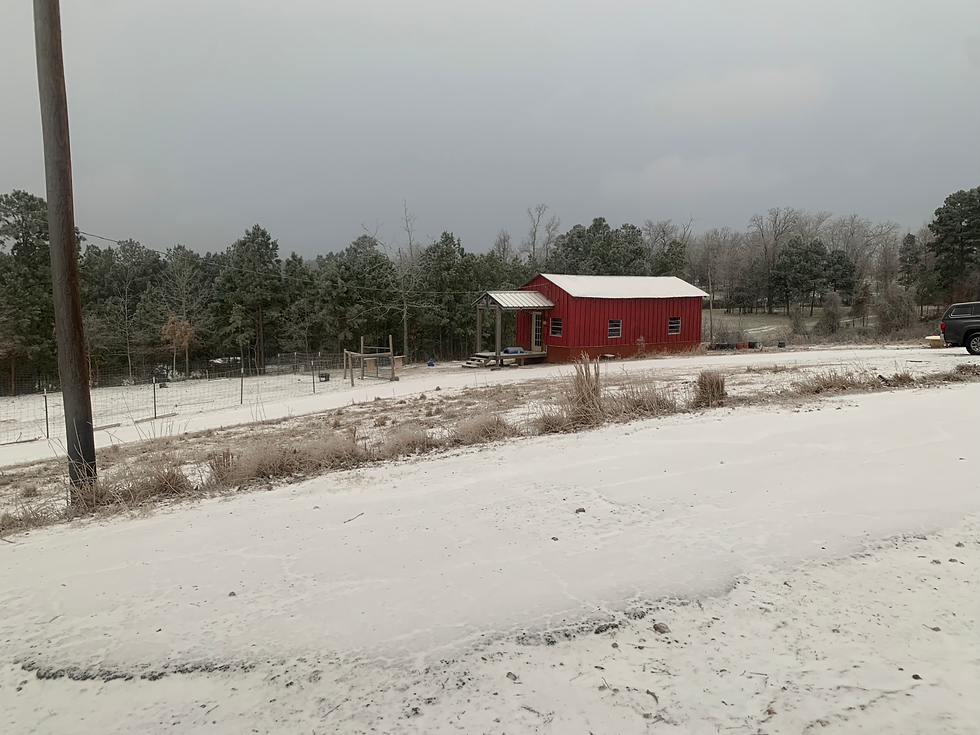
When we finally moved onto five acres in Texas, we did what many enthusiastic new homesteaders do—we went all in. Immediately. All at once.
At our peak, our farm family included two donkeys, three miniature longhorns, three pigs, fifteen
goats, four horses, four dogs, five cats, multiple turkeys, and a flock of chickens that seemed to multiply faster than we could count. Was it magical? Sometimes. Was it educational? Absolutely. Was it overwhelming? Constantly.
It felt like every single week we were putting up new fencing (something we also had to learn how to do), building an animal hutch or shelter, or rearranging space to make room for yet another new member of the farm family. Animals don’t come with instruction manuals, and each one has its own needs, personalities, health concerns, and learning curves. Multiply that by “too many,” and suddenly the simple life starts to look a lot like chaos.
And then there’s the budget—because with every new animal comes feed, bedding, vet care, and supplies. Those costs add up faster than you expect.
If there’s one lesson we learned the hard way, it’s this: add one thing at a time. Learn it well. Let it fit naturally into your daily rhythm before deciding you’re ready for the next step. Your sanity—and your budget—will thank you.
Gardens Grow Faster Than You Think (So Do Weeds)
In the early days of our homesteading journey, our kids were absolutely thrilled to plant the garden. Seeds were chosen with great enthusiasm, rows were planned with big dreams, and everyone was eager to get their hands dirty—at least at first. But as the weeks went by and the novelty wore off, the excitement of planting slowly turned into the reality of weeding. It turns out pulling weeds in the Texas heat isn’t quite as fun as watching tiny sprouts pop out of the soil.
Like many beginners, we made the classic mistake of starting a garden that was far bigger than our ability to maintain. Fueled by excitement and a little too much Pinterest inspiration, we planted enormous gardens only to realize by mid-summer that watering, weeding, harvesting, and preserving had quietly become a full-time job.
Over time, we learned that it’s far better to start with one or two raised beds, grow what your family actually eats, and expand slowly as your confidence grows. A small, thriving garden will always beat an overgrown, guilt-inducing one—and it leaves room for joy to grow alongside the vegetables.
Learning Comes From Doing
(and Occasionally Messing Up)
Homesteading isn’t about perfection—it’s about observation, adaptability, and learning to extend grace to yourself and the animals in your care. Along the way, you discover which plants truly thrive in your soil, which animals fit your lifestyle and daily rhythm, and what routines actually work for your family.
Mistakes are inevitable, but they aren’t failures. They’re part of the education, shaping your confidence and understanding one experience at a time.
A Simpler Life Is Built, Not Bought
At White River Farms, our homestead journey eventually led us to creating small-batch, clean products made with fresh Alpine goat milk from our own herd. But none of that happened overnight.
It started with small steps, big dreams, and a lot of learning along the way.
Whether you’re growing herbs in a window box or dreaming of your own patch of land someday, remember this:
Clean living starts with intention, not perfection.
Start where you are. Use what you have. And maybe—just maybe—hold off on the fifteenth goat.


Comments